
 English
  Türkçe
  Français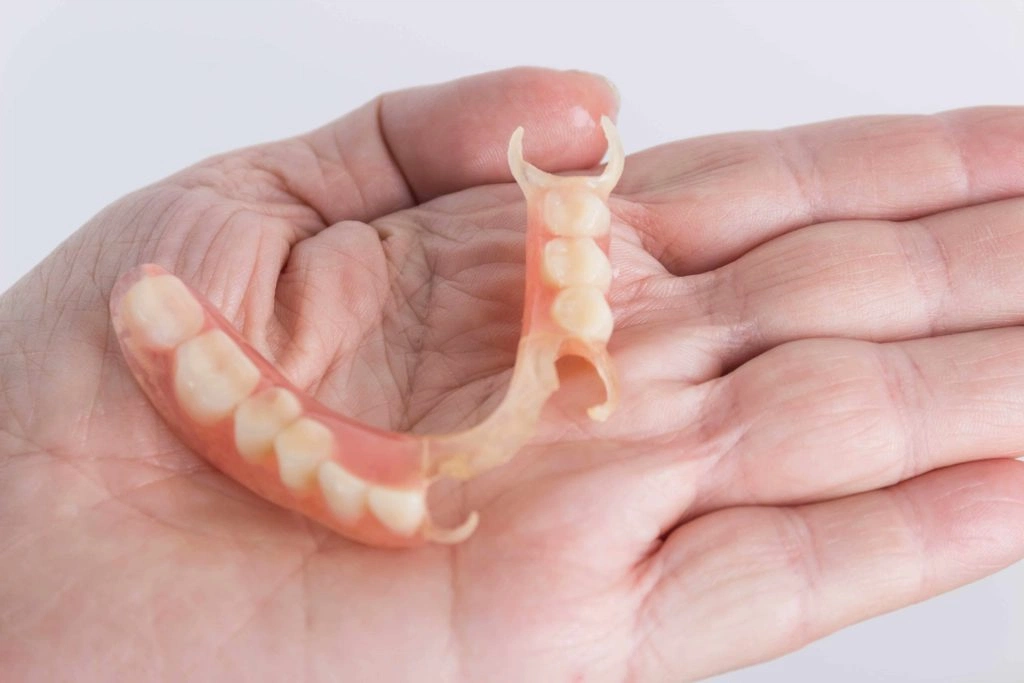
Missing one or more teeth can lead to impaired chewing function, speech problems, and aesthetic concerns over time. Today, there are many fixed and removable treatment options to address these deficiencies. In cases where fixed treatments are not suitable, removable dentures, which offer comfortable and aesthetic solutions, come to the forefront. One of these is flexible partial dentures.
Flexible partial dentures are removable prostheses made from special thermoplastic materials, developed as an alternative to classic removable dentures. They offer a more natural appearance because they have flexible, gum-colored retaining sections instead of metal clasps. Their lightweight structure and flexible properties provide a comfortable wearing experience for many patients.
How are flexible partial dentures made and in what situations are they preferred?
Flexible partial denture treatment is primarily planned after a detailed oral examination. The area of missing teeth, the condition of existing teeth, gum health, and jaw structure are evaluated. Then, an impression is taken of the mouth, and a custom-made prosthesis is prepared in a laboratory.
Thanks to the thermoplastic material used, the prosthesis is both durable and has a certain degree of flexibility. This feature helps the prosthesis fit more comfortably in the mouth and feel more natural during movement.
Flexible partial dentures are particularly suitable for patients for whom implant treatment is not appropriate, who do not want surgery, or who are seeking an alternative for economic reasons. They are also a suitable option for individuals with metal allergies because they do not contain a metal framework.
Protez, eksik dişlerin bulunduğu alanı tamamlayarak hem estetik görünümü iyileştirir hem de çiğneme fonksiyonunu destekler. Böylece kalan doğal dişlere binen yük daha dengeli dağıtılır ve ağız fonksiyonlarının korunmasına katkı sağlanır.
What are the advantages of flexible partial dentures?
One of the most important advantages of flexible partial dentures is their aesthetic appearance. Thanks to the absence of metal clasps, the prosthesis is not noticeable from the outside, resulting in a more natural-looking appearance. This is especially beneficial for patients with missing teeth in the front, positively impacting their self-confidence.
Comfort is also one of its important advantages. Thanks to the flexible material, the prosthesis can adapt better to oral tissues and create less pressure compared to rigid, removable dentures. Its lightweight structure offers comfort during daily use.
In addition, its resistance to breakage to a certain degree is one of the features that supports its lifespan. However, as with all prostheses, regular maintenance and regular dental check-ups should not be neglected.
Cleaning flexible partial dentures is also very important. The denture should be cleaned daily with appropriate cleaning products, and if it needs to be removed at night, it should be stored as recommended by your dentist. Using hot water is not recommended as it can damage the structure of the denture.
Conclusion: An Aesthetic and Comfortable Removable Prosthetic Option
Flexible partial dentures hold a significant place among removable prosthetic options due to their aesthetic appearance, lightweight structure, and comfort of use. They can be a successful alternative, especially for patients who are uncomfortable with the metallic appearance or who are seeking a more natural solution.
However, the most suitable prosthetic option is different for each patient. The extent of tooth loss, oral and jaw structure, general oral health, and personal expectations must be evaluated in detail. Therefore, the treatment plan must be created specifically for each individual after a comprehensive examination by a dentist. A properly planned prosthetic treatment improves quality of life and contributes to a healthy smile for many years.
This text is intended to provide general information. The appropriate treatment method for each patient may vary, and therefore, a dentist who is an expert in the field should be consulted. Before making any decision regarding dental health, it is of great importance that you have a detailed examination and consultation with your physician. These articles are for informational purposes only and are not intended to replace professional medical advice.


 by
by