
 English
 Türkçe
 Français
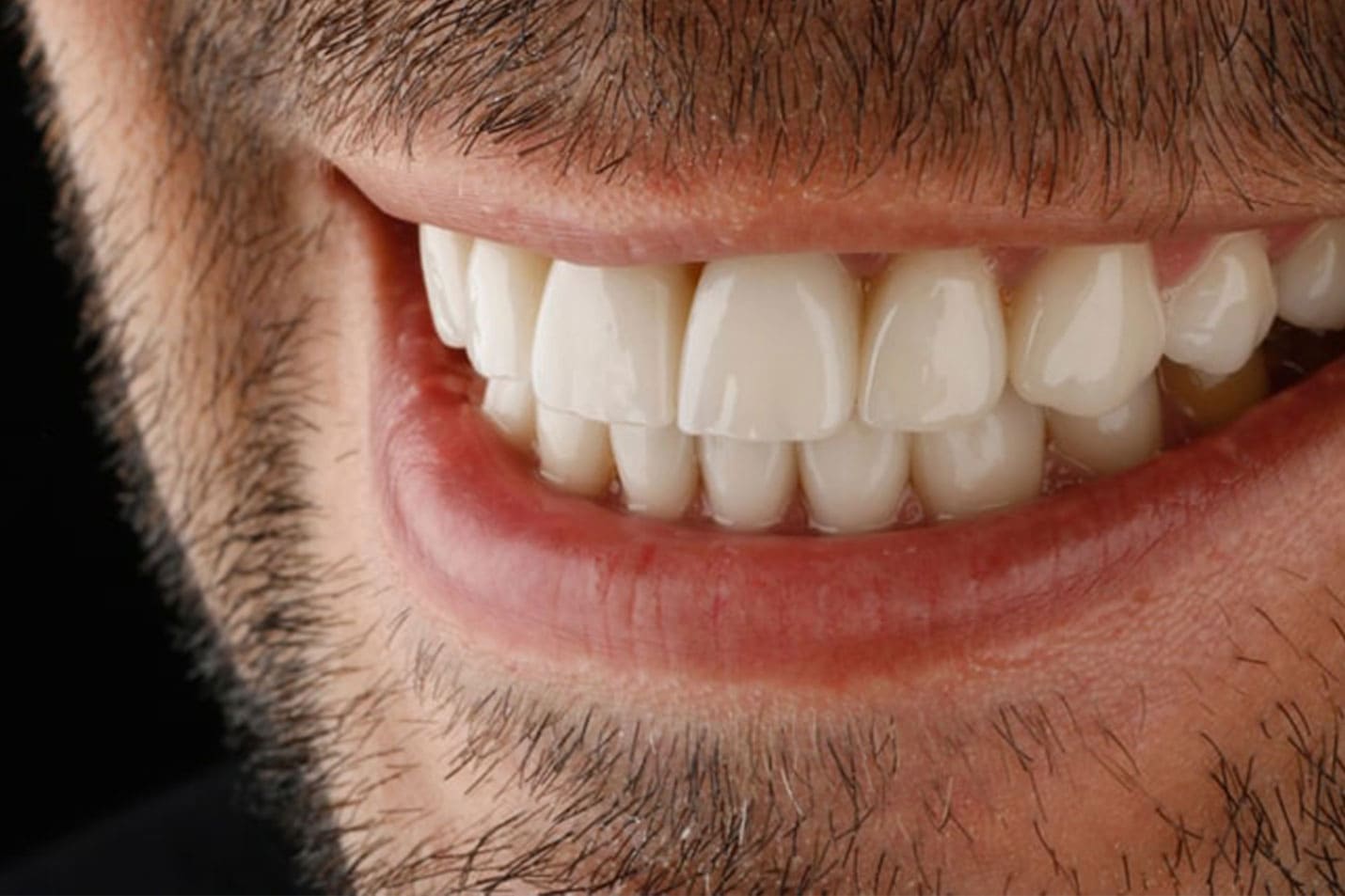
Composite veneers are an aesthetic treatment used to correct minor cracks, irregularities, and gaps on the front surfaces of teeth. The composite material, in the desired tooth color, is shaped to match the appearance of natural teeth. However, factors such as biting hard food, trauma, or teeth grinding can cause cracks or wear in the veneers over time.
In short, when a composite veneer breaks, it doesn't always need to be completely replaced. Small fractures can be repaired by adding new composite under appropriate conditions; surface irregularities can sometimes be removed with smoothing and polishing. Which procedure is appropriate depends on the extent of the damage and the condition of the underlying tooth.
What should be done first if composite laminate flooring breaks?
Do not force the broken or cracked area with your tongue, and do not bite hard foods with that tooth. Do not try to glue the broken piece back together yourself; household glues are not suitable for use in the mouth.
If sharp edges irritate your cheek or tongue, don't delay a dental check-up. If the tooth is loose, displaced, causes severe pain, bleeding, or significant tenderness after the impact, an evaluation is necessary the same day. The tooth itself may also have been damaged during the trauma.
Can a broken composite laminate be repaired?
Yes, repair is possible in many cases of limited damage. When a part of the composite veneer breaks off, new composite can be added to the missing area with proper surface preparation and adhesive application. This avoids unnecessary removal of the intact restoration and natural tooth tissue.
If there are only minor imperfections or surface abrasions, repair and professional polishing may suffice. However, not every crack can be fixed by polishing alone; the depth and nature of the crack must be examined.
When do composite laminates need to be replaced?
If the damage is extensive, the bond between the old veneer and the tooth is weakened, or there are recurrent fractures, complete replacement of the restoration may be considered. If there is decay, a crack, or other problem in the underlying tooth, treatment of this condition will be planned first.
Not every composite veneer fracture requires a transition to porcelain veneers or crowns. The choice of treatment is made by evaluating the remaining healthy tooth tissue, bite relationship, teeth grinding habits, and the individual's needs.
Why do composite laminates break?
Biting down hard objects or food with the front teeth, trauma, teeth grinding, and improper bite contacts can increase the risk of fracture. In some fractures, the thickness of the material, the size of the restoration, and its connection to the tooth can also be factors.
For a laminate that keeps breaking in the same area, simply replacing the missing piece may not be enough. A more permanent solution can be planned after evaluating the cause of the breakage.
How can composite laminate breakage be prevented?
It is important to avoid using your teeth to open packages or bite hard objects, to maintain oral hygiene, and to not miss regular dental checkups. If you have a teeth grinding habit, preventive approaches (such as night guards) deemed appropriate by your dentist may be considered.
Composite veneers can be polished or repaired as needed. However, no restoration is completely resistant to fracture.
Composite Laminate Repair in Ankara
At Dental Aesthetic Center in Ankara, when evaluating composite veneer damage, the extent of the fracture, the condition of the natural tooth tissue, and the bite relationship are all considered together. In suitable cases, repair or replacement options are evaluated, and a treatment plan that preserves the tooth tissue can be created.


 by
