
 English
 Türkçe
 Français
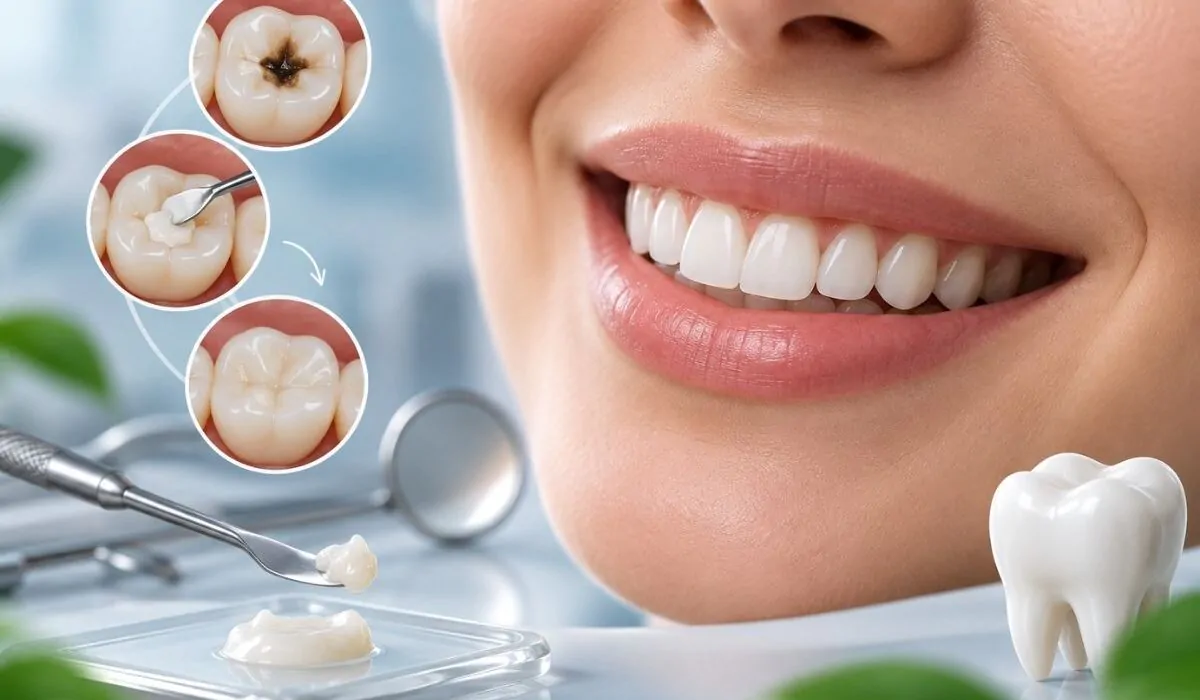
A fractured tooth can be repaired with aesthetic composite filling (bonding), depending on the location and depth of the fracture. Especially in cases where only a small piece of a front tooth is broken and sufficient healthy tooth tissue remains, the shape of the tooth can be reconstructed with composite material. However, deep fractures, damage extending to the nerve tissue, or root fractures may require different treatments.
How can a broken tooth be repaired with aesthetic fillings?
Aesthetic dental fillings are a process of bonding tooth-colored composite resin material to the tooth surface using adhesive methods and shaping it to match the natural tooth form. This procedure is also commonly referred to as "bonding." Depending on the size of the fracture, composite can be used to complete only the missing edge or to reshape a larger surface of the tooth.
The dentist first assesses the extent of the fracture, the remaining tooth tissue, the occlusion relationships, and radiographic findings if necessary. In appropriate cases, composite material is applied in layers, light-cured, and then the contours and surface texture of the tooth are reshaped and polished. The goal is to support appearance and function while preserving as much natural tooth tissue as possible.
Which fractured teeth might be suitable for composite bonding?
Small corner fractures confined to the enamel and some crown fractures that do not affect the vital tissue of the tooth may be suitable for repair with composite restorations. This method is frequently considered in anterior teeth due to the high aesthetic requirements. However, the long-term success of a major restoration depends on factors such as the remaining tooth tissue, the location of the fracture, the forces applied, and the individual's teeth grinding habits.
If a significant portion of the tooth is missing, if the fracture extends below the gum line, if the tooth is mobile, or if nerve tissue is affected, a purely aesthetic filling may not be sufficient. The choice of treatment is made after examination and necessary imaging.
What is the difference between aesthetic fillers, composite veneers, and porcelain veneers?
Replacing a small, fractured tooth edge with composite is generally described as an "aesthetic filling" or "bonding." Composite veneers, on the other hand, are an application where a larger section of the front surface of the front tooth is directly shaped with composite. These are not entirely different materials, but rather procedures that differ according to the scope of composite use. Porcelain veneers are ceramic restorations prepared in a laboratory; they are not necessary for every fracture. The choice should be made according to the tissue loss and biomechanical conditions.
When is root canal treatment or other procedures necessary for a broken tooth?
In cases where a fracture exposes nerve tissue, vital pulp treatments or root canal treatment may be considered, taking into account the developmental status of the tooth and the vitality of the pulp. Not every nerve tissue exposure automatically necessitates root canal treatment. In cases of extensive substance loss, indirect restorations may be required, while more complex approaches may be necessary for some root or crown-root fractures. Not every fractured tooth needs to be extracted, and not every fracture can be corrected with a filling alone.
What should you do first if you break a tooth?
If the broken piece can be found, keep it and take it to your dentist; in some cases, it may be possible to reattach it. Do not chew hard foods with the broken tooth, and avoid irritating the tissues by rubbing your tongue against the sharp edge. If you experience displacement, mobility, persistent bleeding, severe pain, or significant swelling in the tooth after the impact, consult a dentist immediately. Even if there is no pain after the trauma, an examination is important; some injuries may not be noticeable at first glance.
How long does a broken tooth repaired with aesthetic fillings last?
There is no single standard lifespan. The extent and location of the restoration, occlusion forces, teeth grinding, oral hygiene, and care habits all affect durability. Composite restorations may experience discoloration, wear, or marginal fracture over time; repair or polishing can be performed when appropriate. Regular check-ups, identification of factors causing fracture, and avoiding biting hard objects with front teeth are important.
Frequently Asked Questions
Can a front tooth fracture be repaired in a single session?
In suitable and limited crown fractures, direct composite repair can sometimes be completed in a single session. However, the process changes for fractures requiring examination, additional treatment, or follow-up.
Are bonding and cosmetic fillers the same thing?
In tooth repair, the terms are often used interchangeably. Bonding essentially refers to the adhesive bonding of composite material to the tooth; "aesthetic filling" can describe the restoration achieved using this method.
Can the old part of the broken tooth be reattached?
In some crown fractures, if the fractured fragment is in a suitable condition, it can be reconnected using adhesive methods. The decision is made based on the condition of the fragment and the characteristics of the fracture.
Will the color of a broken tooth filling match the natural tooth?
Composites offer a variety of color and opacity options. Color, layering, surface texture, and polishing planning aim to achieve a look close to natural teeth; however, an exact match cannot be guaranteed in every case.
Review of broken tooth treatment in Ankara
At Dental Aesthetic Center, restorative options for fractured teeth are evaluated during a clinical examination, taking into account the preservation of tooth tissue and the functional needs of the tooth. The suitability of composite aesthetic fillings, bonding, composite veneers, or other treatment options is determined according to the characteristics of the fracture. This text is for general informational purposes only; it does not replace personalized diagnosis and treatment recommendations.


 by
