
 English
 Türkçe
 Français
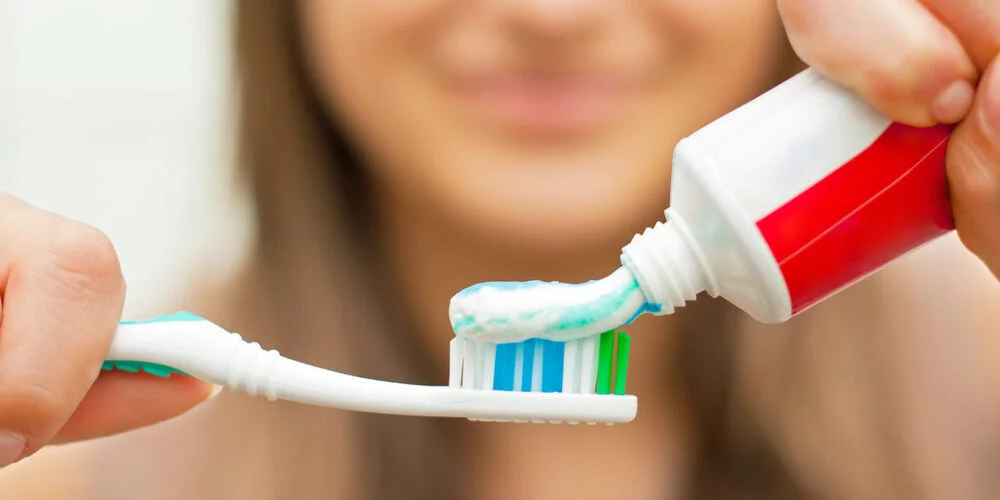
When it comes to children's oral and dental health, one of the most confusing issues for parents is choosing the right toothpaste. Questions like, "Is fluoride harmful for children?", "Should my child use fluoride toothpaste?", or "Is fluoride-free toothpaste safer?" are frequently asked. According to current dental recommendations, it is advised that children use toothpaste containing an appropriate amount of fluoride from the time their first teeth erupt. Fluoride is an important mineral that helps strengthen tooth enamel and protect against cavities.
When should fluoride toothpaste be used on children?
Toothbrushing should begin as soon as a child's first baby tooth erupts. The American Dental Association (ADA) and the American Academy of Pediatric Dentistry (AAPD) recommend using fluoride toothpaste from the moment the first tooth emerges. However, the most important point here is that the amount of toothpaste should be appropriate for the child's age.
For children under 3 years old, it is recommended to apply a very small amount of fluoride toothpaste, about the size of a grain of rice, to the toothbrush. For children aged 3-6, a pea-sized amount is sufficient. Since young children are more prone to swallowing toothpaste, parental supervision during brushing is important.
Brushing teeth twice a day, especially in the morning and at night, is also an important step in preventing cavities. Children should be taught not to swallow toothpaste and to spit it out as much as possible.
Is Fluoride-Free Toothpaste Safer?
While it's commonly believed that fluoride-free toothpaste is safer for children, the issue shouldn't be solely about whether or not it contains fluoride. The effectiveness of fluoride in preventing tooth decay has been well-established scientifically. Therefore, the most important thing for children is using age-appropriate amounts of fluoride toothpaste and ensuring they don't consume more than necessary.
Regular ingestion of excessive amounts of fluoride toothpaste can increase the risk of dental fluorosis during tooth development. However, this risk can be reduced if parents apply the correct amount of toothpaste and supervise young children's brushing routine. Therefore, the solution in most cases is not to avoid fluoride entirely, but to use the right product in the right amount.
Factors such as a child's risk of cavities, dietary habits, fluoride levels in the drinking water in their area, and oral health should also be evaluated. Therefore, it is beneficial to seek personalized advice from a pediatric dentist regarding which product to use, especially for children at high risk of cavities.
Frequently Asked Questions
- Can a 2-year-old child use fluoride toothpaste?
Yes. Fluoride toothpaste can be used from the moment the first tooth erupts. For children under 3 years old, a very small amount, about the size of a grain of rice, should be used, and brushing should be supervised by a parent. - What happens if a child swallows toothpaste?
Accidental swallowing of small amounts usually refers to using the recommended amount of toothpaste. However, if regular or excessive swallowing occurs, a pediatric dentist should be consulted. - Does fluoride toothpaste prevent tooth decay in children?
Yes. Fluoride toothpaste, when combined with regular brushing, helps strengthen tooth enamel and reduce the risk of cavities. The AAPD recommends brushing twice daily with an appropriate amount of fluoride toothpaste for children.
In conclusion, when choosing toothpaste for children, instead of completely avoiding fluoride, attention should be paid to the age-appropriate fluoride content and the correct amount to be used. Dental Estetik Centersupports parents in establishing correct oral care habits by providing professional assessments during examination and follow-up processes aimed at protecting children's oral and dental health.
This text is intended to provide general information. The appropriate treatment method for each patient may vary, and therefore, a dentist who is an expert in the field should be consulted. Before making any decision regarding dental health, it is of great importance that you have a detailed examination and consultation with your physician. These articles are for informational purposes only and are not intended to replace professional medical advice.


 by
